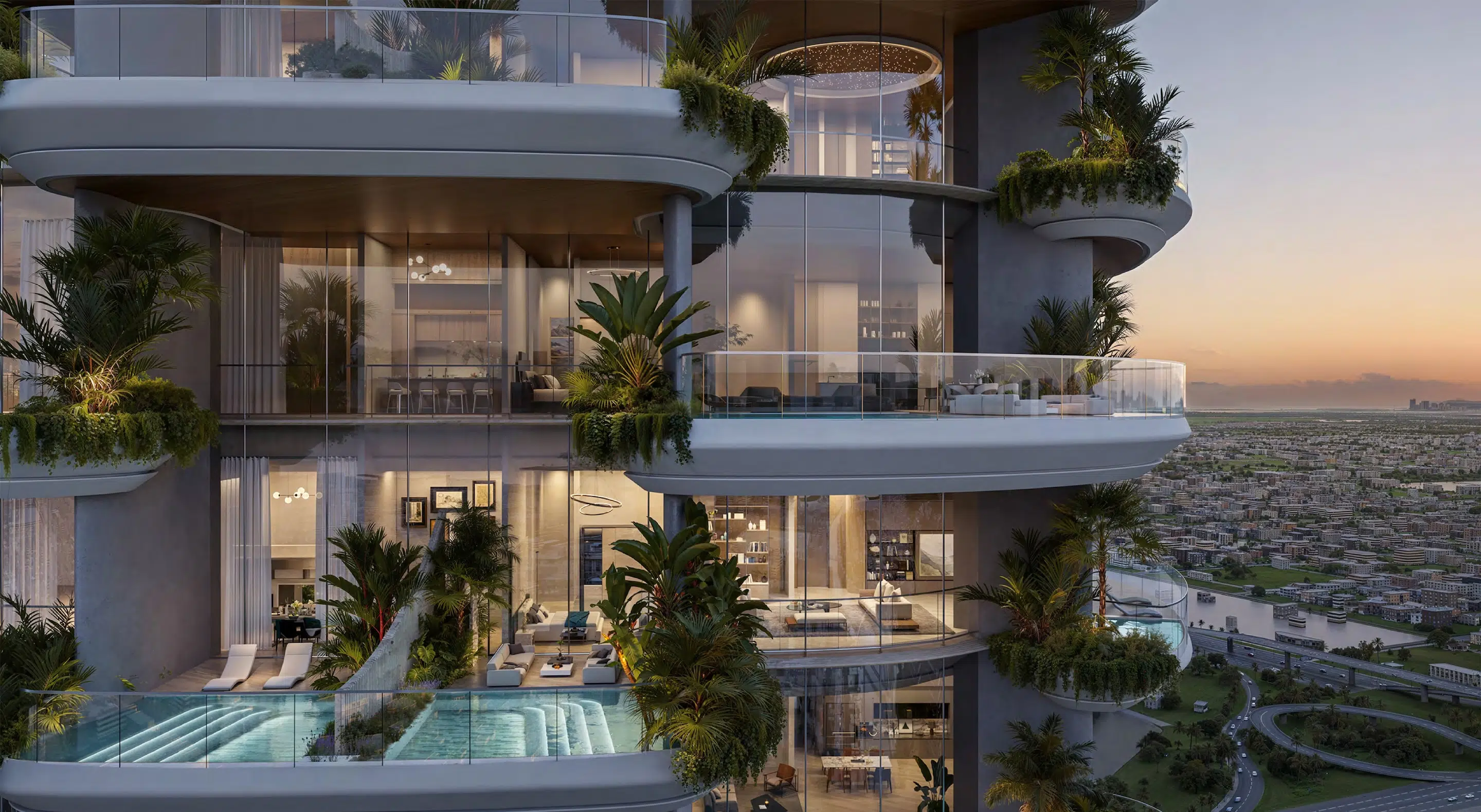
Mother-of-Pearl, Cipollino Verde, Rosso Orobico: the rare materials of Amali
Ultra-prime real estate is judged on materials more than any other category of construction. The marble does not move with the market, but it sets the long-term identity of a building. At Amali Residences on the Dubai Water Canal, the material brief was built around four flagship stones, two heritage hardware partners and a German kitchen appliance benchmark. Each piece has a provenance that buyers can verify.
Mother-of-Pearl: the signature marble
Mother-of-Pearl, also referred to as Madreperola, is a luminous beige-cream stone with iridescent veining that captures and shifts light during the day. Quarried mainly in Turkey and worked through Italian fabricators, the stone is prized for its visual depth: where other beiges sit flat, Mother-of-Pearl carries an internal glow that makes large surfaces read as continuous light rather than fields of pattern.
At Amali, the stone is specified for principal lobbies and key bathroom features. Its calibration with daylight from the canal-facing facade is the reason it was selected over more saturated alternatives. The marble takes a soft satin finish that reads naturally next to the Mother-of-Pearl name.
Rosso Orobico: the Italian counterweight
Rosso Orobico is quarried in the Bergamasque Alps in northern Italy. The stone reads deep burgundy with white and grey calcite veining that gives it a sculptural, almost geological presence. It has been used historically in cathedral floors and palace columns. In contemporary interiors, it functions as a punctuation material: a feature wall, a kitchen island, a powder room behind a sliding door.
HBA Residential specified Rosso Orobico at Amali to provide chromatic counterweight to the lighter palette. The pairing logic is consistent with European hospitality references that combine a cream baseline with one or two saturated accent stones, rather than spreading colour across every surface.
Cipollino Verde: the dynamic veining
Cipollino Verde comes from Apuan Alps quarries on the Tuscan coast and reads as alternating bands of soft green, cream and grey, with veining that ripples like fabric. The name itself comes from cipolla, the Italian word for onion, in reference to the layered appearance. The stone is sometimes considered difficult because its movement is impossible to control across a slab, but in the right hands that movement becomes the visual asset.
Cipollino Verde features at Amali in selected bathroom and joinery applications where dynamic veining adds visual interest without competing with the calmer Mother-of-Pearl baseline.
Blue Mountain marble: the architectural anchor
Blue Mountain marble is sourced from quarries that produce blue-grey stone with subtle white veining, often associated with Turkish and Greek deposits. The colour reads cool and slightly dramatic, which makes it suitable for vertical applications such as feature walls or stair claddings.
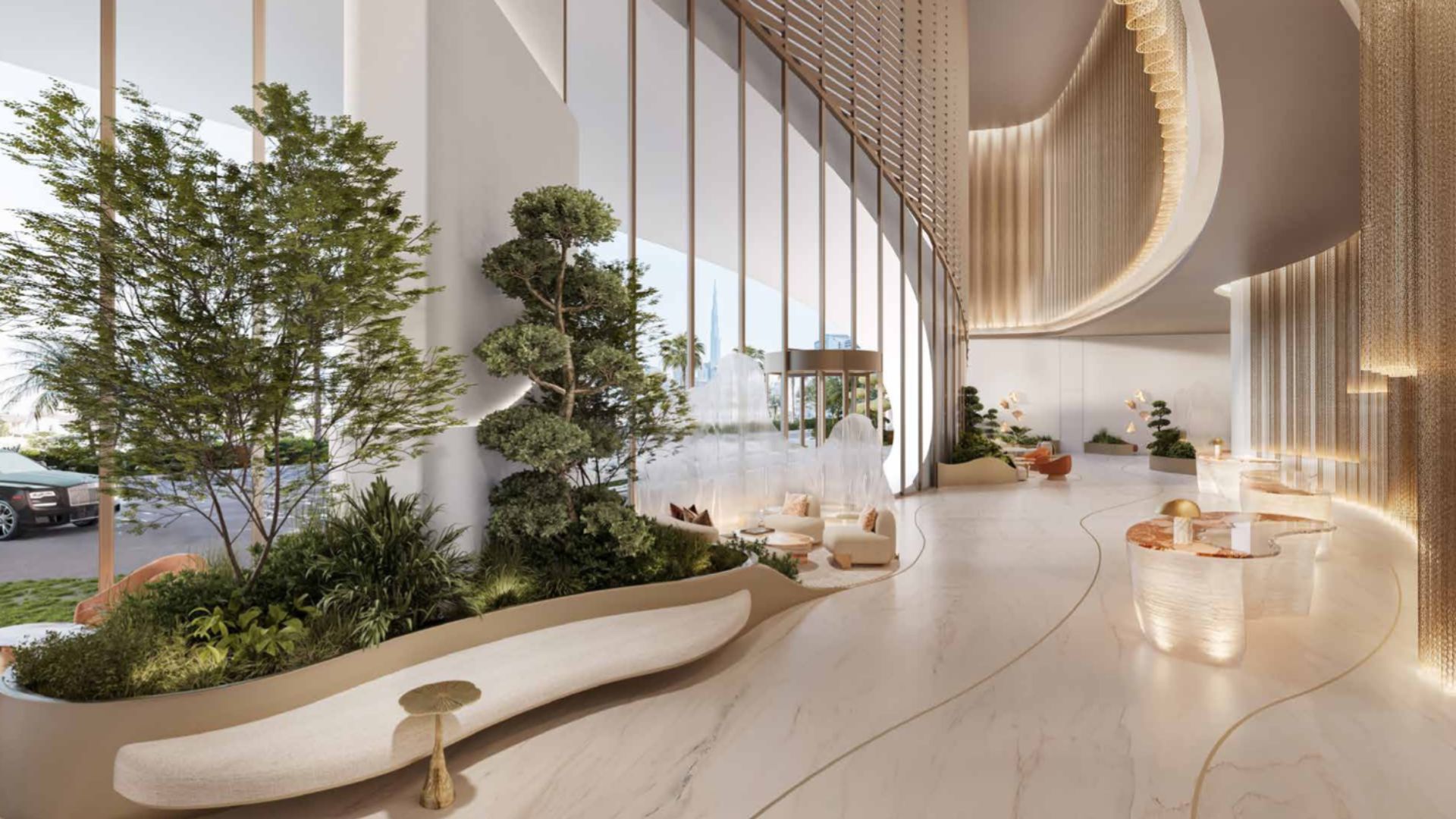
At Amali, the marble brings architectural gravity to circulation spaces and contrasts with the warmer floor stones. The four-stone palette is intentional: each marble has a distinct role, and the combination reads as composed rather than maximalist.
Gaggenau in the kitchen
Kitchens at Amali are equipped with Gaggenau. Founded in 1683 in the Black Forest, Gaggenau is the senior brand of the BSH group and has positioned itself as the appliance reference for ultra-prime kitchens worldwide. Built-in ovens, induction hobs, integrated steam and warming drawers are specified across residences. The brand value at Amali is not only the engineering, it is the visual restraint: Gaggenau panels disappear into custom cabinetry rather than announcing themselves.
Joseph Giles ironmongery
Door handles, cabinet pulls and architectural hardware are by Joseph Giles, the British heritage maker founded in London. The brand supplies bespoke houses, super-yachts and private aviation cabins. Specifying Joseph Giles at residential scale signals that the project team did not stop at the cosmetic finishes and went down to the level of touchpoints. Hardware is the layer a resident interacts with every day, and the difference between a generic supplier and a heritage atelier is felt immediately.
The material catalogue at Amali Residences is not a luxury checklist. It is a coherent set of choices that compound rather than compete, and that will age in a single direction.
By Q4 2029, when handover begins, that material logic will have moved from specification sheets to lived experience. The stones, appliances and hardware are designed to outlast trend cycles, which is what an ultra-prime asset is supposed to do.