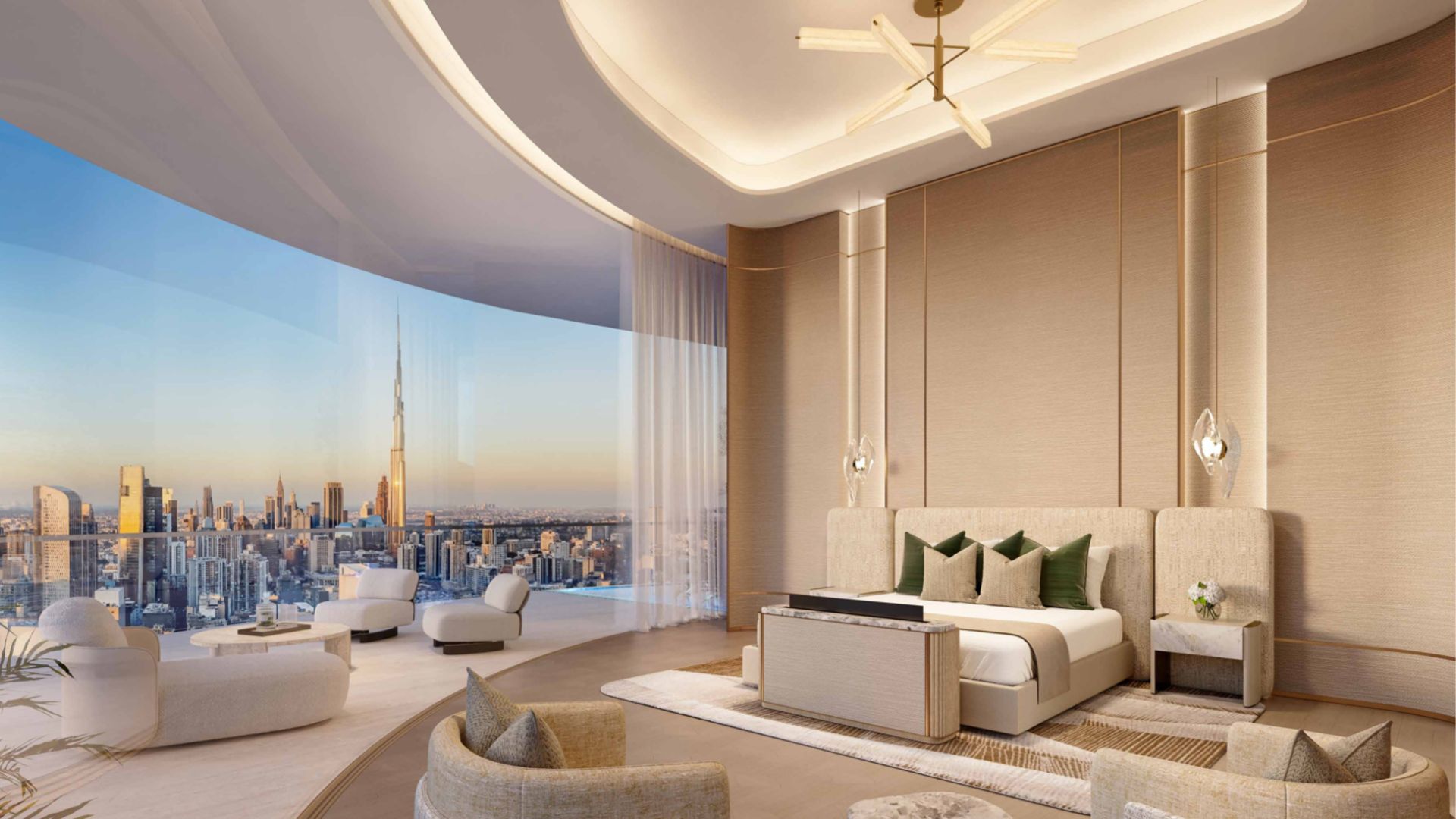
From Burj Khalifa to Dubai Water Canal: the next chapter of Dubai luxury
For two decades, the centre of gravity of Dubai luxury sat in Downtown. Burj Khalifa anchored the skyline, the Dubai Mall anchored the retail map, and the surrounding towers anchored the price ladder. That gravity is shifting. Knight Frank and JLL have both signalled in recent reports that the Dubai Water Canal corridor is now where the highest price-per-square-foot benchmarks are being set, and that the centre of ultra-prime activity has migrated west from Downtown into Al Wasl.
Chapter one: Downtown and the Burj Khalifa decade
Downtown Dubai was inaugurated around 2010 with the opening of Burj Khalifa, then the world's tallest building. The masterplan, developed by Emaar, defined a new model for Gulf urbanism: an iconic tower, a marquee mall, a fountain plaza and surrounding branded residences. Armani Residences in Burj Khalifa, The Address Boulevard, BLVD Heights and IL Primo became reference prices for the decade.
The model worked because it concentrated identity in one address. "Living Downtown" became a recognisable signal, both locally and from abroad. Prices climbed steadily, and Downtown captured the imagination of buyers from Mumbai, London, Moscow and Lagos through a single image of skyline and mall.
The limits of the Downtown formula
By the mid-2020s, Downtown showed signs of saturation typical of any first-generation luxury district. Pedestrian density at the mall, tower-to-tower visual congestion, limited water frontage and inventory dominated by units built between 2008 and 2015 created a ceiling on what new ultra-prime products could deliver. The market started looking for the next address.
Three options emerged. Palm Jumeirah, still the global icon of Dubai luxury, continued to attract beachfront buyers. Jumeirah Bay Island consolidated as the rarefied island address. The Dubai Water Canal, dormant since its 2016 inauguration, became the surprise contender.
Chapter two: the Dubai Water Canal corridor
The Dubai Water Canal stretches 3.2 km from Business Bay to the Arabian Gulf, cutting through Al Wasl and Jumeirah. Its inauguration was a civic moment, but for ten years the canal-front sat mostly unbuilt. Land assemblies were complex, and the first wave of developers preferred to focus on more established locations.
That changed when a handful of ultra-prime developers identified the corridor as the next axis of value capture. Dorchester Collection committed to a hotel and residences. Mr. C Residences arrived under the Cipriani family banner. Lana by Dorchester opened. Casa Canal by AHS Properties partnered with Fendi Casa. Volta Tower and Address Residences are part of the same wave. The canal moved from emerging to established within five years.
Why Al Wasl specifically
Al Wasl is the neighbourhood between Downtown and Jumeirah, west of Business Bay. The area was historically residential and quieter than its neighbours. Its physical position is now its principal asset: a five to seven minute drive to Burj Khalifa and DIFC, similar travel times to City Walk, La Mer and Jumeirah Beach, and direct canal frontage with views of both the canal and the Downtown skyline.
Bayut and Property Finder data through 2025 show Al Wasl outperforming most other Dubai districts on price growth for ultra-prime inventory. Knight Frank's Wealth Report flagged the corridor as a 2026 watch zone for prime capital deployment, with notes that supply remains tight relative to demand for canal-facing units.
What Amali Residences represents in chapter two
Amali Residences sits within this canal corridor with a deliberate positioning. 211 residences across twin towers connected by a wellness podium, signed by Killa Design, with interiors by HBA Residential. Every residence has a private pool. The amenity programme spans 54,648 square feet across three podiums. The address combines the architectural ambition of a civic building with the privacy of a low-density residential tower.
By inserting itself in Al Wasl, Amali Residences makes a clear statement: the next chapter of Dubai luxury is being authored on the Water Canal, and the room for signature inventory is limited.
Reading the shift
Downtown is not losing. Burj Khalifa will remain the global landmark, and Dubai Mall will continue to draw daily traffic that no other location can match. But ultra-prime capital is now allocating closer to the canal, where new product can be designed from scratch rather than inserted into a saturated grid. For buyers, the question is no longer whether the canal becomes prime - it already has - but how much canal-facing inventory will remain on the market once the Q4 2029 handover wave begins.